In October, an engineer in Atlanta released free versions of Photoshop, Illustrator and Premiere built with Claude. Days later he added clones of Word, PowerPoint and Excel. One of those projects collected 54,000 stars on GitHub in two weeks, and LinkedIn filled up with premature obituaries for Adobe and Microsoft.
The technique behind it has a name: reverse engineering. What AI did with it is impressive. What it did not do is replace, in a few weeks, software that has spent decades fixing bugs with millions of users.
What AI learned to do this month
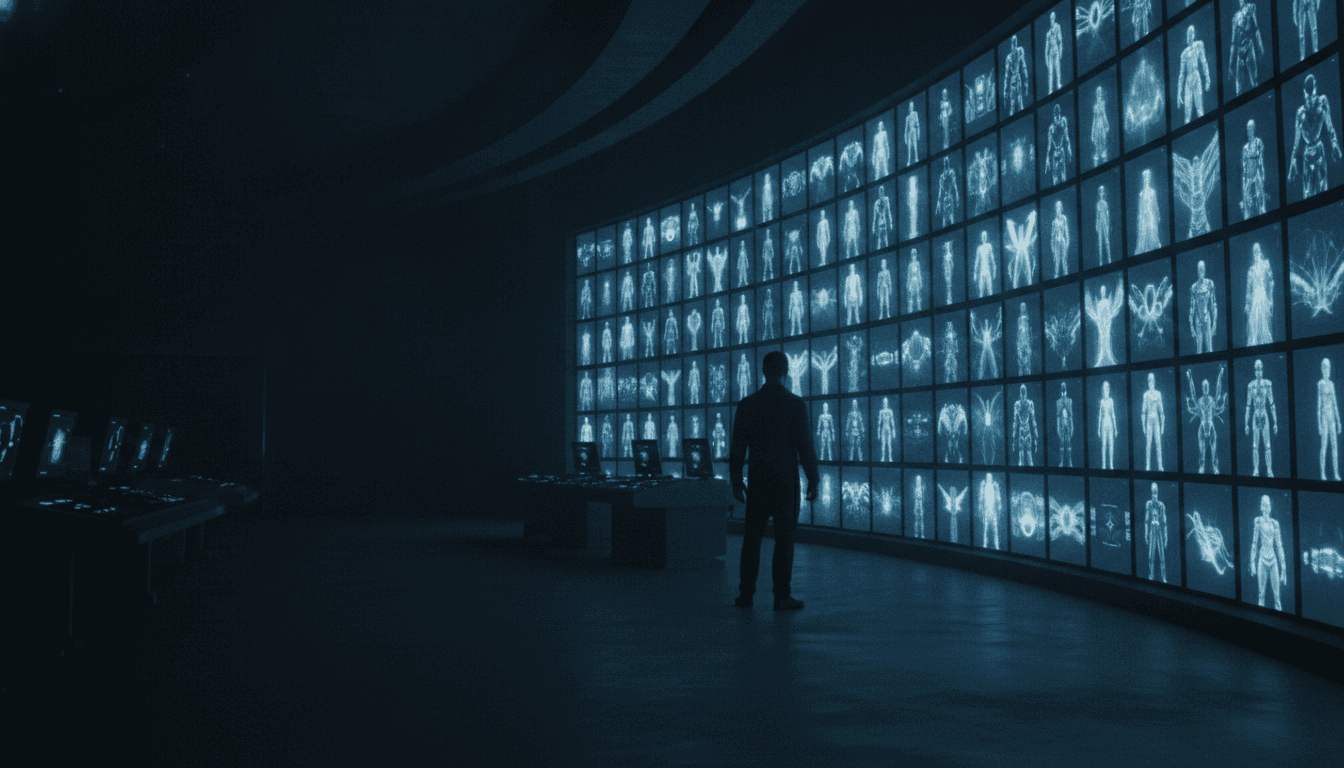
Reverse engineering means taking a finished program and working out how it functions without its source code. The discipline is about forty years old, and it has always been slow, specialist work measured in months.
The new part is speed. On October 7, REA (Reverse Engineer Anything) was released, a tool that connects an AI agent to the classic reverse engineering programs. Within a day it reached the top of GitHub.
The case that best shows the scale is Bun, a programming runtime that was rewritten from one language to another in 11 days, with up to 64 Claude instances working in parallel. The author estimates that three engineers would have needed a year. The AI bill: about USD 165,000.
The shift is so real that decomp.dev, the reference community for decompiling video games, shut down on October 15. Its administrator explained that it is no longer possible to tell which projects were made by a person and which by an agent.
The clone that freezes on a large photo
Now, the product. PhotoCraft, the Photoshop clone, is an alpha with more than 800 open issues. It freezes on images larger than 8,192 pixels, mishandles PSD files and has rudimentary color management.
It works great as long as nobody uses it for work.
In controlled tests, AI decompilers correctly recover between 60% and 65% of a program's functions. That is a huge leap for the discipline, and it still leaves more than a third of the program unsolved. In office software, that third includes exactly the cases that make a month-end spreadsheet open the same way on every computer in the company.
What doesn't come in the installer
Reverse engineering works on what is installed on your computer. The value of modern software increasingly lives outside it.
| What AI can copy | What it can't copy |
|---|---|
| The interface and menus | The services that run in the cloud |
| The basic features | Third-party licenses |
| Reading public file formats | Decades of edge cases already solved |
| The code of a local program | Support when something breaks |
| The security and compliance a company requires |
The cloud. Photoshop's generative fill, Copilot in Word or file sync in OneDrive and SharePoint run on Microsoft and Adobe servers. There is no file to decompile. Most enterprise software already works this way.
Third-party licenses. Pantone palettes, for example, belong to Pantone. Adobe had to remove them from its programs in 2022. No clone brings them along by magic.
The edge cases. Office has existed for more than thirty years. Each version fixed problems that only appear when millions of people open old files, inherited macros and spreadsheets built by someone who no longer works at the company. A clone starts that learning from zero.
Support. Free software costs nothing until the day it fails in the middle of closing the books. That day the question is who to call, and in a GitHub repository the answer is usually to open issue number 801.
Security and compliance. A company needs admin controls, auditing, certifications and guarantees about where its data lives. That is built with contracts and years of operation, and it does not show up in any decompilation.
AI copies what the program shows. What makes it reliable lives somewhere else.
Code doesn't know why it exists
Even where AI does serious work, such as modernizing old systems inside a company, the limit shows up fast. Amazon migrated more than 30,000 applications with AI agents, and its engineers accepted 79% of the proposed changes without modification.
The remaining 21% is the expensive part. Undocumented business rules, the special agreement with one client or the exception someone added ten years ago are not in the code. They are in someone's head. An agent can read what a system does, but not why it does it that way.
Where the threat is real
Downplaying the phenomenon would be another mistake. For simple apps with few features and no services behind them, AI reverse engineering is a concrete threat. Small developers already report clones of their products built in days.
And even if Adobe or Microsoft don't disappear, free alternatives can put pressure on their prices. That is good news for anyone paying for licenses, as long as they don't confuse price pressure with replacement.
The question before canceling the license
Before canceling a license because a clone showed up on GitHub, ask the right question: if something breaks tomorrow, who answers? If the answer is "a repository with 800 open issues", the savings are an illusion.
AI cut the work of understanding a program from months to days. What takes years to build, the confidence that it will work on Monday at nine in the morning, still takes years.
To get the next analysis, subscribe to the macareno.net newsletter.
Sources
- AI Reverse Engineering: Is Adobe Dead?, AkitaOnRails
- How AI apps are offering free substitutes for Big Tech software, Al Jazeera
- Video Game Reverse Engineering Community Shuts Down Because AI Has Made It Too Easy, 404 Media
- An AI agent that reverse engineers any software just hit number one on GitHub, Startup Fortune
- How AI Agents Rewrite Legacy Code, And Where They Fail, PC Tech Magazine