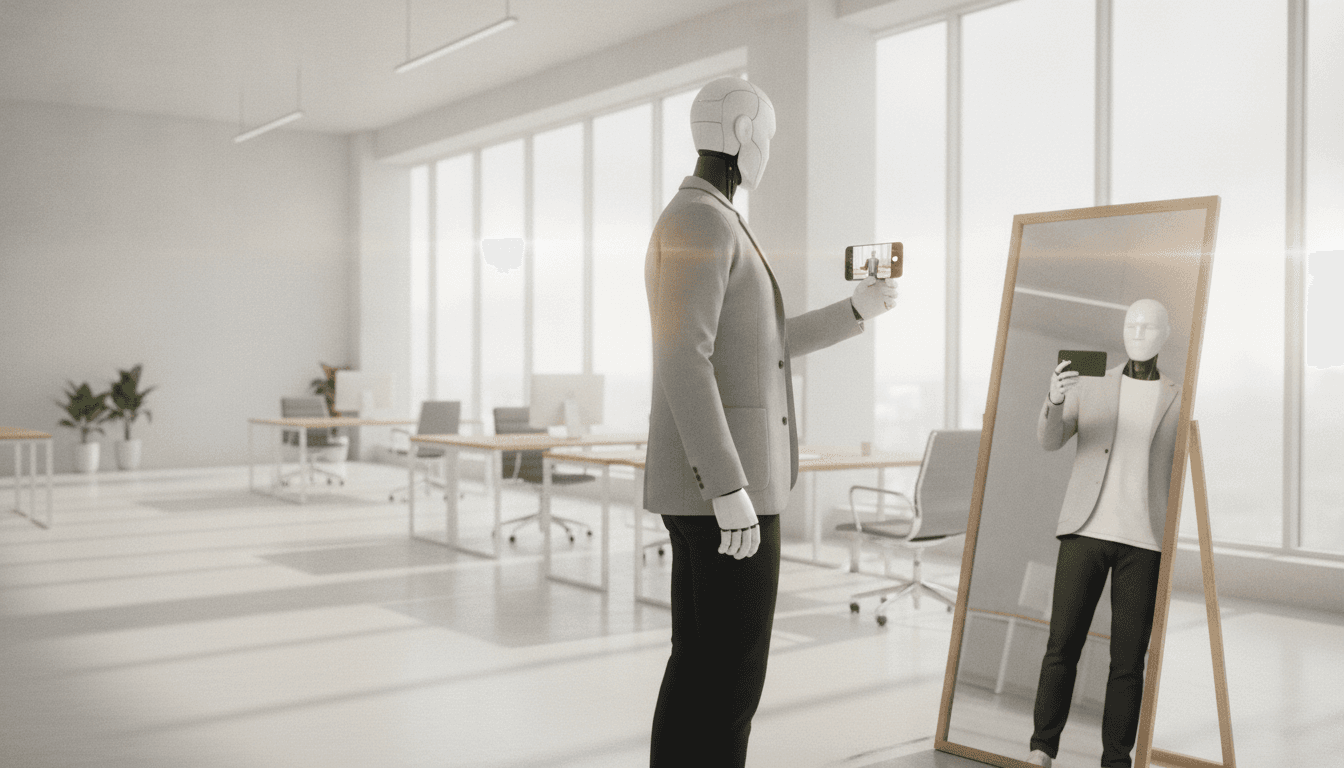
Spend ten minutes on LinkedIn and you've seen it. A well-written post with an original idea, and in the comments someone announcing: "ChatGPT wrote this, you can tell by the dashes". Evidence presented, case closed. The author can swear they wrote it alone, at eleven at night, with cold coffee. Doesn't matter. The em dash has spoken.
The em dash has been in books for centuries. Online, people now call it the "ChatGPT dash", and it works like a fingerprint in a trial where the defendant has no lawyer and the judge is anyone with wifi and an opinion.
The funny part is that this year's studies show we are terrible detectives. The less funny part is what we do detect.
Convicted by a punctuation mark
It happened to Jonathan Stark, an American consultant who has sent a daily email to his subscribers since 2016. Around 2,555 of those emails went out before ChatGPT existed. This year he started getting replies from readers proud to have caught him writing with AI. Ten years of craft defeated by a punctuation mark.
Language models overuse the em dash, that much is true. Whether one em dash proves anything is another conversation. People have been accused of submitting AI text because of a single em dash in an entire document. One. Like convicting anyone who owns a pen of forgery.
The side effect is already visible. A Reddit user stopped using em dashes after being accused, once again, of being a bot for writing three well-argued paragraphs. A student writes on her blog that she misplaces commas on purpose in her university assignments, because she has already been accused several times.
For centuries, teachers fought to get students to use commas properly. Three years of ChatGPT were enough to teach them to misuse commas on purpose.
Everyone has a detector, and none of them work
Ask in any office who can recognize AI text and every hand goes up. Researchers are less optimistic: neither people nor tools can reliably tell human text from generated text, and the confidence of "I can always tell" tends to confirm itself. You get it right once and remember it forever. You get it wrong ten times and never find out.
Detection tools don't save anyone either. They fail most in the most common case, text a person writes and AI polishes. And they get it wrong more often with two groups: neurodivergent people and those writing in a language that isn't their own. If you're Latin American and write in English for clients or on LinkedIn, congratulations, you're in the risk group.
| The internet court's evidence | What the studies say |
|---|---|
| "It has an em dash" | Writers have used it for centuries, and AI learned it from them |
| "It's too well written" | Detectors flag people who use common vocabulary more often |
| "I can tell right away" | Without disclosure, almost nobody considers the text might be AI |
| "I ran it through a detector" | They fail precisely on mixed texts, which are the majority |
The confession weighs more than the text
Researchers at the University of Michigan showed personal messages to a group of participants: apologies, thank-you notes, the kind you send after choosing every word carefully. Some were told a person wrote them, others that it was AI, and a third group was told nothing.
Same text, word for word. When they knew it was AI, the sender became lazy and insincere. Attributed to a person, the sender was genuine and thoughtful. And the group with no information thought exactly the same as the group that believed it was human.
Nobody suspected. Not even people who use AI almost every day, who should be the first to doubt. They generate AI text daily, read AI text daily and, faced with an unsigned message, assume a person wrote it. The detective doesn't recognize his own handwriting.
Another team followed this effect for 15 months, with thousands of participants, and tried everything to soften it. Describing the AI as brilliant, giving it human traits, clarifying that a person only used it as a tool. Nothing worked. Saying "I wrote this with AI help" cost just as much as saying "a machine wrote this".
Readers almost never find the AI in the text. They find it in the confession.
Transparency, that extreme sport
The Nielsen Norman Group gave it a name: the disclosure paradox. People say they want to know when AI was used and, when they're told, they penalize the content. Like asking for honesty about a gift and taking offense when it arrives.
To be fair, not every study agrees. A review of 47 studies on news found no consistent penalty once the effect of the disclosure itself is isolated. And an experiment with scientific texts offered a useful clue: adding "human-edited" to the AI label eliminated the loss of trust.
Provisional moral: readers accept AI when they see someone signing behind it.
LinkedIn, the factory with quality control
On LinkedIn, the suspicion has some basis. Pangram analyzed more than a million posts and estimated that over 40% of the platform's long-form posts are written entirely by AI, the highest share among the networks measured. Originality.ai, using a different method, reports more than 80% in its July sample.
Two detectors, the same feed, a twofold difference. And these are the tools we expect to use to judge who wrote what.
In May, LinkedIn announced it would detect and reduce the reach of content that looks AI-generated. The same platform that offers you a button to improve your post with AI. It sells you the car and then hands you the ticket.
Writing worse to look human
Generic AI text will lose reach anyway, for being generic. The real cost of this witch hunt falls on people who write well and start distrusting their own style.
Dropping the em dash, breaking up paragraphs, planting mistakes: a standard that rewards sloppiness and punishes care. With an extra problem. AI learns from what we write, so in a year or two it will imitate the deliberate mistakes too, and we're back where we started with worse texts. An arms race where the weapon is a misplaced comma.
What actually works inside a company
For anyone writing announcements, corporate posts or client messages with AI help, the studies leave some very practical clues:
- Write with what only you know. The concrete case, the real number, what happened in your operation. That doesn't come out of any generic prompt.
- If you disclose AI use, disclose who reviewed it too. "Drafted with AI support and reviewed by the communications team" tells readers what they want to know: that someone stands behind the text.
- Don't turn punctuation into internal policy. Banning the em dash or asking for "more imperfect" texts only produces worse texts.
- Don't use detectors to judge employees. With that error rate on mixed texts and non-native writers, an accusation based on a percentage is unfair.
The em dash stays
ChatGPT didn't invent the em dash. It learned it from us, like almost everything it knows. I'd rather discuss something else: whether the text has something to say and whether someone is willing to stand behind it. No detector measures that.
If your company is already debating whether to disclose AI use in announcements and posts, send me a message. Let's talk it through, em dash optional.
Sources
- Most people do not realize when a personal message they receive was written by AI, Fast Company / The Conversation
- People consistently devalue creative writing generated by artificial intelligence, PsyPost
- The AI Disclosure Paradox, Nielsen Norman Group
- Authorship attribution and trust in AI-generated scientific texts, Psychology Journal HSE
- How not to be mistaken for a chatbot, WHYY
- AI detectors are bad judges of the human voice, Technical.ly
- This email was written by a human, Jonathan Stark
- LinkedIn leads the charge with AI-generated content, Fast Company SA
- AI in Social Media Statistics, SQ Magazine